
The S&P BSE Sensex has gained 149 points to open at 25,802.

The risk-reward ratio could turn adverse for foreign investors if corporate earnings disappoint by wide margins, or if crude oil prices spike in the international market, putting pressure on the rupee-dollar exchange rate.

Park only savings that need not be touched for many years, says Devangshu Datta.

Retail investors have gained significant heft in the past year amid a sustained uptick in Indian equities. The share of retail investors in companies listed on the NSE reached an all-time high of 7.32 per cent in the quarter ended December 31, 2021, up from 7.13 per cent in the previous quarter and 6.9 per cent a year ago, the data from PRIME Infobase shows. This was despite the Nifty's 1.5 per cent decline during the quarter.

Foreign portfolio investors (FPIs) have pumped in a whopping $33.8 billion into domestic equities and debt till February 15 this fiscal year -- the highest since FY15 when it was nearly $46 billion --taking their net outstanding investments to a record $592.5 billion, as per a report. Of the total FPI assets of $592.5 billion, $537.4 billion were in equities and $51.38 billion in debt, according to the data collated by Care Ratings. The maximum holding is in financial services sector at $191.3 billion, followed by software ($76.1 billion), oil & gas ($50 billion), automobiles & auto components ($26.9 billion, pharmaceuticals & biotechnology ($22.8 billion), sovereign ($21.7 billion--debt), household & personal products ($20.2 billion), capital goods ($19.8 billion), food, beverages & tobacco ($15.7 billion) and insurance ($13.4 billion).

The Sensex is on course to ending calendar year (CY) 2019 at a price-earnings (P/E) multiple of 29x, the highest in 25 years. Current valuations are, however, lower than those seen in the early 1990s. The Sensex has risen close to 14 per cent in the last 12 months, while the index underlying EPS dropped 6.7 per cent during the period.
Investors who play follow-the-leader and invest wherever the Foreign Portfolio Investors are going may face painful losses.

As yields rise, bond prices fall. Higher yields not only translate into losses for investors, it also pushes up borrowing cost for companies as well as government

'Recent underperformance notwithstanding, equities should constitute a major part of investors' financial portfolio.'

At the outset, decide whether you want to be a trader or an investor, suggest Sarbajeet K Sen and Sanjay Kumar Singh.

Record equity divestment by the Reliance Group in its telecom and retail businesses garnering around $23 billion revved up the deal street in 2020, which otherwise would have gone down as one of the dullest on record, and dealmakers are seeing sunnier days in 2021 given the large scope for consolidation in a slew of sectors ravaged by the pandemic. With Jio Platforms alone garnering over $16 billion (Rs 1,18,318 crore) by selling 25.24 per cent stake and Reliance Retail notching up $6.4 billion (Rs 47,265 crore) by divesting around 9 per cent shareholding, the deal street signed off with $85 billion in the deal kitty across 1,270 transactions. This is higher by about 10 per cent over 2019. What is significant is that over a third of the total deal value came from Reliance transactions, say investment bankers.

The capital infusion is expected to bolster its presence in the country by funding its key businesses to take on Indian rival Ola.

RailTel Corporation of India, Indigo Paints, Home First Finance Company, Indian Railway Finance Corporation, and Suryoday Small Finance Bank are among the companies looking to tap the market.
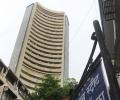
Investors will keenly watch US Fed meet starting Tuesday

The share of non-resident Indians (NRIs) and overseas investors in Indian mutual funds has been declining over time, despite adding half-a-trillion rupees to holdings over the last five years. Mutual fund holdings for the segment went up from Rs 0.95 trillion as of December 2018 to Rs 1.54 trillion as of December 2022, shows Business Standard analysis of data from the industry body Association of Mutual Funds in India (Amfi). Their share in overall mutual fund assets has fallen from 4.2 per cent to 3.9 per cent during the same period.

Highlights of the announcements made by Finance Minister Nirmala Sitharaman on the reduction in corporate tax and other fiscal relief measures for the economy to promote growth and investment.

Even though option to invest as a company is available, many FPIs have chosen trust route to enjoy less tax or zero tax through tax havens such as the Cayman Islands and Luxembourg.
With the Sensex again nearing 28,000 points, investors can make good returns with a one-two year horizon.

'Indians are great savers, but they are lousy investors.'

India's total value of defence production breached Rs 1 trillion-mark in the fiscal year 2022-23 (FY23), up 12 per cent year-on-year (YoY). At the bourses, this has been well reflected in related-stocks from the sector as they gained considerable ground during this period. Shares of Hindustan Aeronautics (HAL), Mazagon Dock Shipbuilders, MTAR Technologies, Bharat Electronics (BEL), and Bharat Dynamics (BDL) have skyrocketed up to 160 per cent in a year, as against a 14 per cent jump in the S&P BSE Sensex.

"We will raise Rs 300 crore via bonds of two-, three- and five-year tenures. This will be our maiden bond issuance and is part of our effort to widen funding sources," says Vimal Bhandari, executive vice-chairman and chief executive officer (CEO), Arka Fincap. The firm, a subsidiary of Kirloskar Oil, is only five years old and small (assets of around Rs 5,000 crore with an "AA" rating), but the response to this float will be closely watched: It would be the first by a non-banking finance company (NBFC) after Mint Road upped the risk weights on bank exposures to them by 25 percentage points. The move by the Reserve Bank of India (RBI) has caught NBFCs off guard even though the issue had been flagged by Governor Shaktikanta Das with their corner-room occupants (and that of banks) in July and August 2023 - on consumer credit and the dependency on bank borrowings.

Why can't we have a sunset clause for the ARCs, which is a global norm? questions Tamal Bandyopadhyay.

The NSE Nifty, after shuttling between 10,698.35 and 10,587.50, finished the session 91.50 points, or 0.86 per cent higher at 10,684.65.

The exemption from MAT does not apply retroactively.

'Large-caps are better placed to withstand the impact of higher input cost inflation, rising rates and withdrawal of excess global liquidity.'
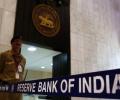
The RBI is not statutorily independent from the government but has long enjoyed wide latitude

'To the believers of crypto regulations, I have only one question to ask, how will you regulate it?'

On Friday, the rupee fell to its 26-month low at 66.89.

India's largest two-wheeler maker by volume - Hero MotoCorp (Hero) - posted a better-than-expected operating performance in the January-March (fourth quarter, or Q4) quarter of 2022-23 (FY23). Riding on higher average selling prices which were up 5 per cent year-on-year (YoY) and volume growth of 7 per cent, the company registered a 12 per cent growth in revenue to Rs 8,306 crore. The company sold 127,000 units in the quarter, largely driven by domestic sales which were up 11.6 per cent, while exports saw a sharp fall of 57 per cent over the year-ago quarter.

At a time when the overall narrative is around India being an attractive investment destination, the two American multinationals are more specific in projecting India as their centrepiece.

FPIs would be classified into two categories instead of three, while the requirements for issuance and subscription of offshore derivative instruments would be rationalised.

The broader NSE Nifty sank 177.65 points or 1.53 per cent to 11,419.25.
In February, FPIs sold $421 mn in debt; in March they have sold $133 mn so far

Investors should take this opportunity to look at asset allocation and realign their portfolio.

These stocks offer the best combination of maximum 'buy' recommendations from brokerages and share price upside over the next 12 months.

Omkeshwar Singh, Head, Rank MF, a mutual fund investment platform, answers your queries.

Against an offer of 4.55 crore shares of Adani Enterprises Ltd, only 4.7 lakh were subscribed, according to information available from the BSE. Adani Enterprises fell almost 20 per cent to below the offer price of its secondary sale as all the seven listed companies of the conglomerate took a beating in the aftermath of Hindenberg Reserach alleged that the group was "engaged in a brazen stock manipulation and accounting fraud scheme over the course of decades".

However, in the last few sessions, the stock of Mukesh Ambani-controlled Reliance Industries Limited (RIL), hit its 52-week low level of Rs 2269.75, and has been one of the worst performers among the Sensex pack thus far in calendar year 2023 (CY23). Thus far in CY23, RIL has tanked nearly 11 per cent as compared to a fall of around 5 per cent in the S&P BSE Sensex. The fall in the stock, according to Gaurang Shah, senior vice-president at Geojit Financial Services is mostly due to the overall dip in the market sentiment, which in turn has impacted large-caps, including RIL.

The new Insurance Bill may take little time to see light of teh day.

Companies spent less money buying back their shares from the public last year than at any time since 2015. They announced buybacks of up to Rs 14,341 crore, show numbers from primary market tracker Prime Database. The total amount spent was Rs 13,597 crore. Both the amounts are lower than what was offered (Rs 39,564 crore) and spent (Rs 36,517 crore) in 2020.
 © 2026 Rediff.com - Advertise with us - Disclaimer - Privacy Policy - Sitemap - Feedback - About us - Terms of use - Grievances